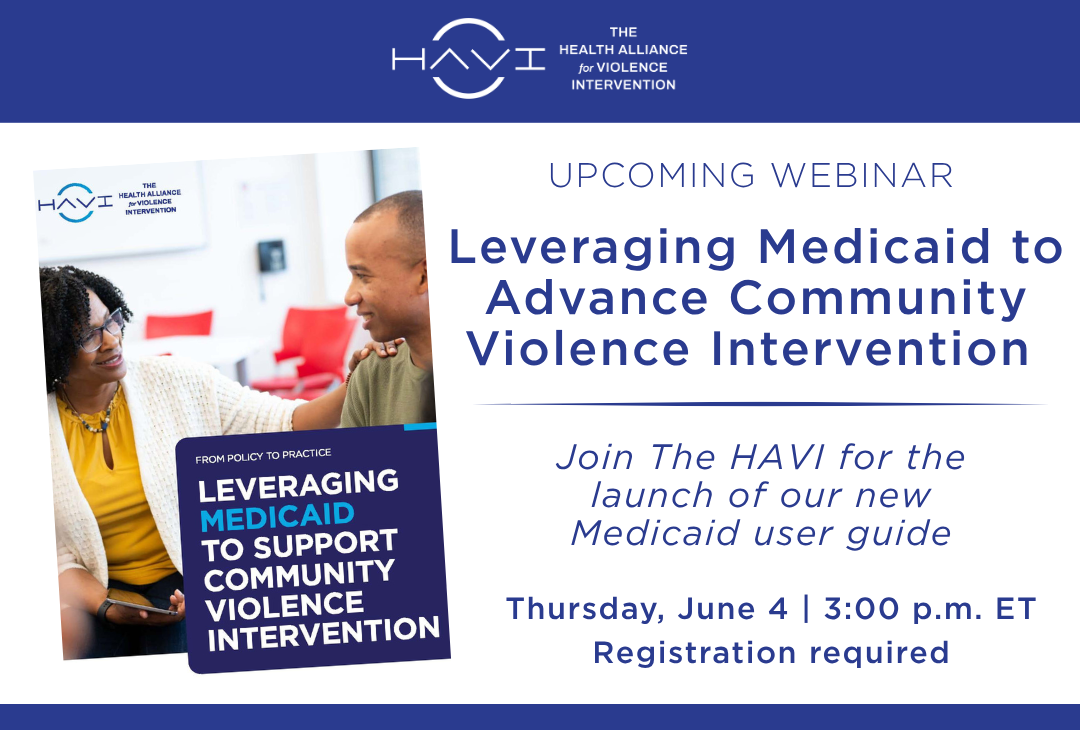
Leveraging Medicaid to Advance Community Violence Intervention (CVI)
As federal funding shifts and communities seek sustainable solutions to reduce violence, states are increasingly turning to Medicaid to support Community Violence Intervention (CVI) as a public health strategy.
Join The HAVI for a practical conversation on how states and CVI organizations can use Medicaid funding to sustain and strengthen this work. This webinar will explore a new step-by-step resource designed to help programs and state administrators understand the Medicaid landscape, assess readiness for reimbursement, and navigate the complex system of violence prevention insurance benefits.
Whether you are new to Medicaid billing or exploring long-term sustainability strategies for your program, this session will offer practical guidance, lessons learned, and actionable tools to support your work.
Thursday, June 4, 2026
3:00–4:00 p.m. ET
Speakers include:
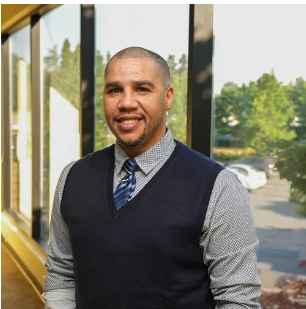
Roy Moore is a nationally recognized expert and leader in violence intervention and prevention. He has directed programs for six years, building on over a decade of experience in the sector. Roy is a certified Peer Support Specialist and a frequent speaker at national conferences on the topic. His work is noted for its impact, including significant contributions to programmatic sustainability through successful Medicaid billing.

Molly Taylor has worked for the State of Oregon for more than 21 years and currently serves within the Oregon Health Authority’s Public Health Division, supporting the expansion of Hospital-Based Violence Intervention Programs (HVIPs) throughout Oregon. In 2022, she led policy development and implementation of Oregon’s State Plan Amendment to secure Medicaid participation for HVIP services for victims of community violence. As the division’s subject matter expert, Molly advanced the professionalization of violence prevention professionals and advocated for reimbursement rates that reflect their expertise and impact.

Louisa Aviles is a Senior Program Officer in the Joyce Foundation’s Gun Violence Prevention & Justice Reform program. She is focused on advancing the program's mission of building safe and just communities in the Great Lakes through support for effective state-level gun policy and for the policy and practice of violence intervention. Prior to joining the Joyce Foundation, Louisa spent more than eight years at National Network for Safe Communities (NNSC), where she worked to advance the emerging science of violence prevention through applied research with frontline public safety practitioners and close collaboration with city- and state-level policy leaders.

Kyle Fischer, MD, MPH, FACEP is a clinical associate professor and the director of the Health Policy and Leadership Fellowship program at the University of Maryland School of Medicine, Department of Emergency Medicine. Broadly, his interests focus on novel approaches to emergency department based public health interventions and their intersection with public policy. Dr. Fischer works extensively in the field of violence prevention through the Health Alliance for Violence Intervention where he serves as the Policy Director.

Kalice Allen is the senior manager for policy and advocacy at the Health Alliance for Violence Intervention (HAVI). In this role, Kalice supports the advocacy efforts of community members, professional organizations, lawmakers, and health care providers to champion the growth of hospital-based violence intervention programs (HVIPs) at both the state and national levels. She has a specialized focus on the development and implementation of state-level Medicaid policy to direct funding and resources towards violence prevention initiatives.